Read the World #2: Broken April by Ismail Kadare
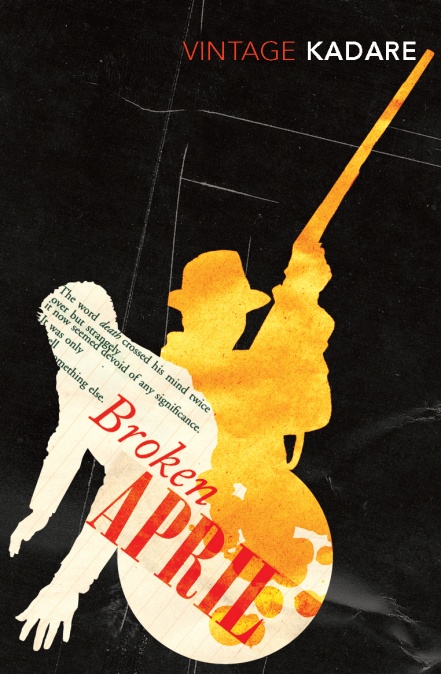
Thirty days, he said to himself. The shot fired from that ridge above the highway had cut his life in two: the twenty-six years he had lived thus far, and the thirty days that began on that very day, the seventeenth of March, and would end on the seventeenth of April. Then the life of a bat, but he was not counting that any longer.
Broken April is a deeply haunting tragedy taking place in rural northern Albania in the 30s — on the High Plateau mired by the centuries-old tradition of blood feuds, as dictated by the Kanun (as are all aspects of life).
The protagonist Gjorg reluctantly kills a man from a neighboring family to avenge his brother’s death. In turn, after thirty days’ truce, it will be his turn to be hunted down. (Not-so-spoiler alert: Gjorg dies at the end.) For as long as the families are unable to reconcile, the blood feud is set to continue, so on and so forth. But time is ticking, and poor Gjorg must travel far to hand over the blood tax while the truce is still in effect.
I went into this book nearly blind, without even reading the blurb. (Easier to do with a digital edition.) I would have assumed the setting was mostly fictional or at least heavily exaggerated, but I suppose truth really can be stranger than fiction.1 Chiefly, Kadare describes the cyclical, oppressive nature of the blood feud. The atmosphere is utterly suffocating under the tyranny of the all-encompassing Kanun (and those who profit from the blood tax). He grounds this in vivid, almost otherworldly descriptions of barren landscapes punctuated by villages and stone towers23. It seems almost as if Kadare wishes to deliberately alienate the unfamiliar reader; to hammer home the point that this place is beholden to its own rules and no one else’s.
Apart from the mention of rifles, the beginning of the book gives nearly no clues as to when it takes place. Which is fitting, as the High Plateau is shown to be frozen in time. It is not until later that Kadare introduces the honeymooning Bessian and Diana, hailing from Tirana with all its modern (1930s) luxuries and sensibilities. The middle of nowhere is a strange choice for a honeymoon, but Bessian is a writer enamored with the region, and so he wishes to experience it for himself. They mirror the role of the reader as outsiders, in their voyeuristic curiosity, shock, and pity in response to this “backwards” culture.
The paths of Gjorg and Bessian/Diana only briefly intersect. Gjorg is instantly captivated by Diana’s beauty, and she his pale, haunted expression. This is the catalyst for the tragic remainder of the book, each searching for the other for three weeks to no avail — in Gjorg’s case, until his final moments. A heart-rending end to a powerful book indeed.
On a side note, I’d actually finished this book a month ago. In fact, I’m nearly done with the next book in the challenge, Death and the Gardener. It only took me this long to publish this because I’ve been recovering from surgery, which I may or may not blog about. Hopefully I will be able to publish more after my upcoming finals in mid-April. We’ll see.
Although in decline, the custom persists to this day despite crackdowns in the Communist era — see this illuminating article.↩
Kulla, fortified towers that act as safe havens for those subject to the blood feud.↩
No doubt the gritty realism is enhanced by the excellent prose style as rendered by translator John Hodgson.↩